
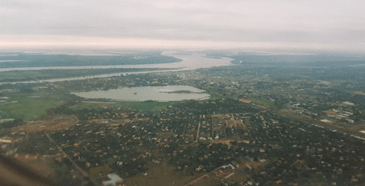
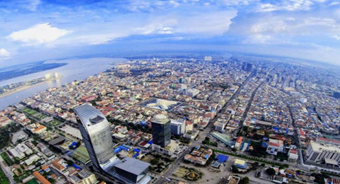
We have done this before. Seeing genocide—millions of Cambodians dead and millions of starving survivors—Aotearoa has chosen the wrong side of history in order to assure American-led allies that we shared their priorities. I saw the cost while travelling and working with Cambodian survivors. Now, again, Aotearoa is content to follow a criminal American agenda.
Cambodia, 1979 – 1990
Cambodia sits between the regional powers of Vietnam and Thailand. The US regarded Cambodia as an adjunct to their war in Vietnam. From the late 1960s, President Richard Nixon authorised a secret, escalating bombardment of neutral Cambodia.
I was a child then, but I knew there was something I needed to learn in Cambodia. I studied, from the mid-1980s I travelled and then I worked in Cambodia to understand what had happened. Every Cambodian I knew who joined the Khmer Rouge, explained that they had been radicalised by the bombing. That unreachable rain of violence was intolerable.
Embittered and extremist, the Khmer Rouge took power in 1975. They sealed off Cambodia, emptied the cities and reduced their country to a forced-labour camp. The world did nothing for four years, while the Khmer Rouge committed unfathomable crimes. They killed, starved or worked to death up to 2,000,000 people, a fifth of the population.
In late 1978, ostensibly responding to Khmer Rouge cross-border raids, Vietnam invaded Cambodia and overthrew the Khmer Rouge. Vietnam installed a compliant Cambodian government led by Heng Samrin. Stories tumbled forth of the most profound suffering and trauma. A loyal remnant of the Khmer Rouge retreated into camps along the Thai border. Many others took off their uniforms and disappeared into the crowds of Cambodians who were searching for relatives, walking toward their abandoned cities or villages; walking – and not planting.
The Khmer Rouge had dragged Cambodia back to a pre-industrial state. It was the poorest place on earth, its people hungry and grieving in darkness, its infrastructure shattered. There were no reserves of food. Famine quickly set in.
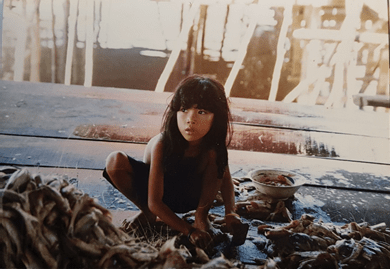
The regional ASEAN group of states and the US led the response to Cambodia’s occupation and famine. Thailand wanted a buffer between itself and Vietnam, and the Khmer Rouge camps offered that buffer. The US wanted to punish Vietnam for humiliating America at war four years earlier. They aimed to ‘bleed Vietnam dry’ with the burden of feeding millions of starving Cambodian survivors in addition to its own population. Genocide? According to diplomatic cables and notes cited here, former Thai Foreign Minister Siddhi Savetsila explained during a visit to New Zealand in February 1981 that genocide was “for the people of Cambodia to deal with, not Thailand and not Vietnam.”
Genocide was not our concern either.
We, Aotearoa, loyally adopted ASEAN’s agenda. For twelve years, we recognised the Khmer Rouge genocidaires as the rightful representatives of Cambodia. We provided infrequent, small amounts of humanitarian aid to the Khmer Rouge-controlled “bamboo ghetto” camps. We withheld recognition from Cambodia’s government, and we did nothing to meet the most basic rights of Cambodians to food, justice, self-determination, and safety.
A few Western states chose principle. Australia and the UK swiftly de-recognised the Khmer Rouge, and a few countries did aid Cambodia.
In just the first year of ASEAN’s aid embargo, Counting Civilian Casualties estimates that 300,000 Cambodians died from starvation-related causes. Through the 1980s, one in five Cambodian children died in their first five years. I visited and wrote about people whose suffering did not break the surface of the world’s concern.
In the countryside, a few NGOs struggled to feed the Cambodians who languished in inland camps between two armies. Ben Pringg camp, between Battambang and Pailin, was within artillery range of the Khmer Rouge. A woman there explained to me that they had eaten their rice seed and were again hungry. They knew that they were consuming the year’s potential crop – but with nothing else to eat, they would all have starved before the rice grew. The Khmer Rouge (our guys) shelled the NGO trucks that tried to deliver food.
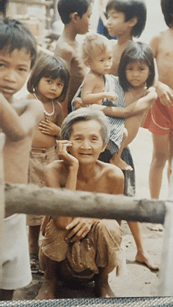
As a donor state, we must have understood that our aid choice contributed to massive, avoidable human suffering. Sending aid into an environment of scarcity alters its balance of power. In famine, food is a magnet. I recall any number of Cambodians who told of their losses and then mused about conditions at the Thai border. If they wanted to seek food, they had to seek out the Khmer Rouge who controlled it.[1]
Denied aid and trade in the name of politics, Cambodia remained the poorest place on earth a full decade after the Khmer Rouge fell, with an annual per capita GDP of $40 US. It also became the most heavily mined ground on the planet.
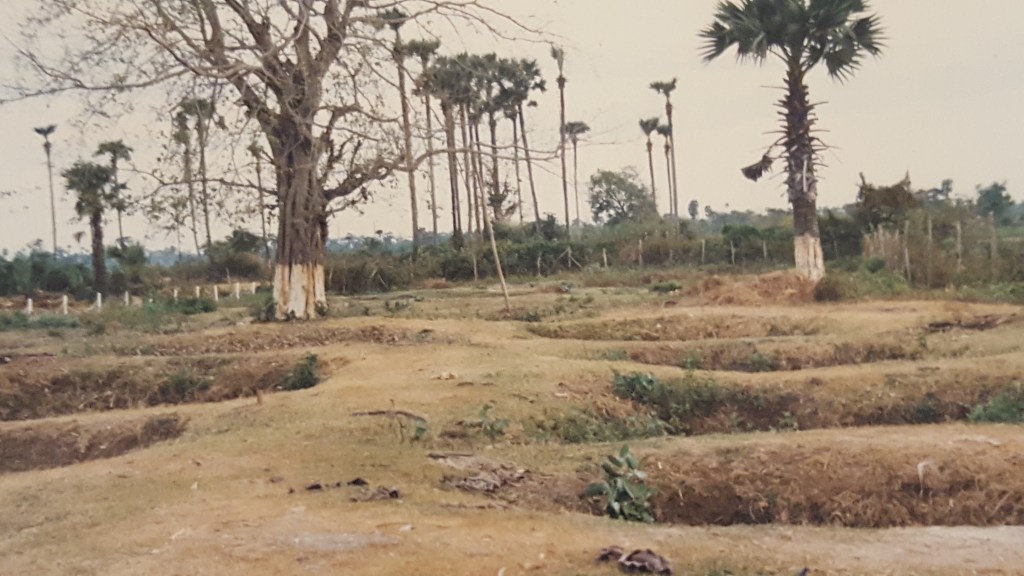
In histories like The Devil You Know: New Zealand’s Recognition Policy Towards Cambodia From 1978 – 1990, successive NZ Foreign Affairs Ministers’ reiterate that our Cambodia policy demonstrated our reliability as an ASEAN ally. Our loyalty led us into absurdity as we pursued a policy whose logical outcome – the return of the Khmer Rouge to power – we did not want. We adhered to the ASEAN line until 19 July, 1990. By then the Vietnamese had departed. The US had withdrawn its recognition from the Khmer Rouge-led coalition. Further from the headlines, Cambodia’s civil war sputtered on for another pointless decade.
Leading an NGO staffed by Cambodians with disabilities, I heard Cambodia’s story narrated primarily by people who survived the genocide as children. The men had been child soldiers in all of the armies, and most of my colleagues had lost limbs to landmines. They explained the meaninglessness, the fatuousness of war. They felt fated; fighting was just something they were told to do. They recalled that, when units of opposing armies stumbled upon each other in the jungle, they would first try to back away, hoping to avoid conflict by mutual, unspoken agreement.
While I worked on my Khmer literacy, I often read the local papers with colleagues who were also struggling to master Cambodia’s esoteric alphabet. Once we read a story about an aspiring criminal who gave his followers a gun and $20. I turned to the man sitting next to me and asked him if he would join. He shrugged, “If someone gives me a gun and pays me then I have to fight.”
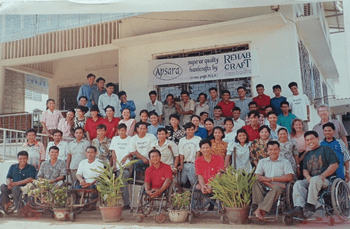
My colleagues had been exposed to the most heartless power. Policies like ours helped to convince them that they would always remain unprotected.
Our choices in Cambodia highlight the harm we have done as a follower-state. If we were ever going to act on principle, we should have done it when we faced the stark choice to align with the genocidaires or their survivors. We were a willing part of a regime of power built on the suffering of a powerless nation. That sort of stability is anathema to justice or to any durable peace.
Here we are again, pursuing a policy in Palestine whose logical outcome (the erasure of a nation and its state; a world of impunity, devoid of civilian protection and law) we say we do not want. To paraphrase the Thai Foreign Minister’s 1981 comment, we act as if Israel’s crimes need not be our concern – and again, we cling to that stance even as most of our colonial allies find it too absurd and offensive to maintain (in word if not yet in action).
If we want to end genocide – to end Israel’s genocide and prevent others that will take Israel’s crimes as their precedent – we need policy that values life. Some people scoff at the very idea of values-led policy. They call it naive. I ask them whether our policies in Cambodia or Palestine, unanchored by values, look sophisticated. Or independent.
The wealthy states bring a computational theory to the transformational issues around us. They calculate how little they must give up in order to keep the killing out of the headlines. But we face issues which will not be resolved at the margins.
The UN marks Genocides Remembrance and Prevention Day on December 9. If we are to end this genocide and prevent future genocides, we need to change the conditions that allow genocide. We need to change the politicans who trot along after those who have brought us all to the cliff’s edge. In the coming election, we need to vote for life, planet, Te Tiriti and radical foreign policy ambitions, around which to galvanise new networks of shared purpose.
Marilyn Garson
(Portions of this text were posted in a different form in December 2021.)
[1] On the limbo of war economy, see the work of Mark Duffield. On humanitarian donorship practice, see initiatives like the Overseas Development Institute’s Good Humanitarian Donorship. On the specifics of the Cambodian aid embargo, see for example Punishing the Poor, which Oxfam has made freely available here.
 Sh'ma Koleinu - Alternative Jewish Voices (NZ)