
Palestine Action UK: GJP supports demands for hunger strikers’ freedom

For Immediate release re: Palestine Action UK
GJP supports demands for the hunger strikers’ freedom

Eight prisoners associated with Palestine Action have been on hunger strike, in protest against their repressive and inhumane conditions in British prisons. Several have been hospitalised; their health is deteriorating quickly, so they need urgent intervention. To hear their message, see this video.   

Here are the prisoners’ six demands: end all censorship of communications; release them on bail immediately; ensure their right to a fair trial; drop the terror link and all terrorism charges against them; shut Elbit Systems down.

The demands have more details on this page. They are the basis for sending a standard letter, available on this page, to six UK agencies. We ask you to do so urgently. For the prisoners’ history, see the Mondoweiss article, 11 December.

Along with 24 other prisoners, those eight face trial for allegedly taking action to prevent arms manufacturers from shipping weapons to Israel.  These were especially direct actions against Elbit Systems, an Israeli arms manufacturer which has been central to the Israeli military-industrial complex.  It has supplied weaponry, surveillance, and targeting systems to inflict Israel’s colonization of Palestine and its repeated assaults on Gaza. Elbit’s drones patrol besieged skies, its systems guide lethal strikes, and its electronic warfare suppresses dissent.

The prisoners are being held on remand, i.e. without having been convicted of any crime, some for more than a year.  Their communications with family and friends have been censored. And their right to a fair trial is being restricted; some documents relevant to their defence have been withheld from their or their lawyers’ view. These conditions violate the prisoners’ basic human rights.

Why are they subjected to such cruel, inhumane conditions?  Since Israel’s genocide began in October 2023, mass opposition has contested the UK’s collusion.  In response, the state further demonized the domestic resistance and inflicted more severe repression. It has made hundreds of arrests on false pretences, aimed at imposing bail conditions and deterring protest.  

In June 2025 the government banned Palestine Action as a terrorist organization, so that overt support became a terrorist offence; see the statement by our affiliate JVL. This ban triggered mass defiance.  More than 2400 people have openly declared their support, resulting in hundreds of arrests (see article), including members of  GJP affiliates (JVL and JNP). 

Despite the state’s repression, Palestine Action has become  the solidarity movement’s most effective, well-known resistance against the UK’s military complicity with Israel’s genocide.  It has inspired popular support, other solidarity activities and defiance of UK repression.  So the state seeks to punish Palestine Action’s prisoners even before a trial and to make this more difficult for them. 

The prisoners’ response has analogies with the 1981 hunger strike by Irish Republican prisoners in H-Block at Long Kesh in Northern Ireland.  Shortly beforehand, the UK government had changed their status from political (prisoners-of-war) to ordinary criminals, seeking to delegitimize their struggle and demoralize them. In response, the prisoners demanded restoration of their political status and began a hunger strike.  To highlight this analogy, on 5th December a London public meeting was addressed by several veterans of the 1981 Smash H-Block Campaign, including Bernadette McAliskey. Echoing their defiance, today’s hunger strikers have said, “Never will they label our liberation struggle as criminal,”

GJP urges supporters worldwide to send the letters on the page.

Read this statement on our website

GLOBAL JEWS FOR PALESTINE

————————–

We are Jews from many countries, who are members of local, national and international networks and organizations. We are multi-ethnic and multigenerational and our members embrace a broad range of viewpoints on Jewish religious and ethical traditions. We are connected by our involvement in the struggle for Palestinian rights, and by our determination to work for justice. We oppose Zionism and all forms of racism and colonialism.

We believe that it is our particular responsibility to challenge Jewish organizations whose alliances and actions undermine Palestinian human and national rights, promote Jewish exceptionalism, and overturn Jewish social justice traditions. At the heart of our work is the fight for Palestinian liberation and the struggle for a world free of racial and ethnic hierarchy, colonial domination, and unbridled militarism.

Aroha to the Sydney Jewish community

December 15, 2025

This morning we awake to the shocking news that two murderers have attacked Jewish Australians at a Chanukah gathering. We condemn utterly each act of senseless violence. Chanukah is a festival of light, and this crime has cast it into deep darkness.

We in Aotearoa were forever changed by another act of murder at a religious site. Our grief remains raw. This morning we feel it in empathy for the Jewish community in Sydney as they reckon with their losses. We send them our aroha and we wish comfort for them in their trauma.

We should all be safe when we gather. All of us, everywhere.

Zichronum Livrachah – may their memories be a blessing.

Alternative Jewish Voices of Aotearoa

Chanukah 2025: Eight Lights for Rights

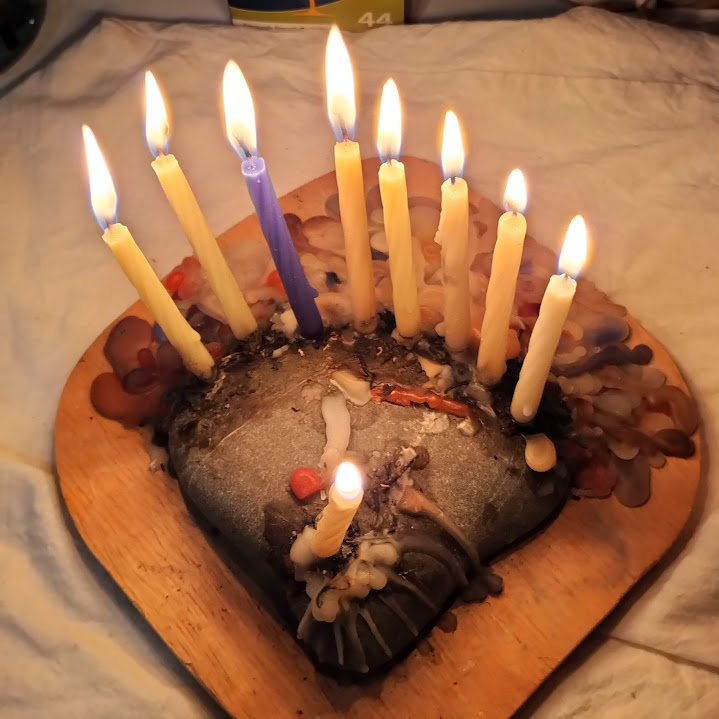
Chanukah 2025: this year, we kindle eight lights for rights.

The Jewish holiday of Chanukah (December 14 – 22, 2025) suffers from its proximity to Christmas. Chanukah’s relevance gets lost in the glitter.

The story of Chanukah, told in four Books of the Maccabees, is not part of the Jewish canon. It is found in the Apocrypha; a harsh and militant story of resistance to the Greek Seleucid Empire’s occupation of Palestine. The text is bloody with the torture which enforced decades of occupation.

Upon liberating the land in 164 BCE, the victorious fighters re-consecrate the Second Temple. A miracle sits at the heart of the holiday story, as the temple lights burnt unnaturally long. The flame of resistance was seen not to be extinguished. 2189 years later, we continue to honour that unquenchable spirit by lighting eight Chanukah candles.

As with all of our ancient texts, threads of history are wrapped in emotive and interpretive gloss. Rather than being mired in the grudges or licensed by the exultations, we are tasked with drawing out today’s meanings. How do we honour the spirit of Chanukah today?

We do not honour it in the mindset of warfare. Chanukah marks the end of imperial rule by occupation. Chanukah is not the act of an occupied people; it is the first act of their self-determination. It commemorates that moment when resistance can give way to reconstruction—and therefore, it signifies the questions of vision and potential.

To celebrate Chanukah this year we ask, what are the lights that burn so stubbornly now? In these days of ceaseless occupation and genocide, what is the vision for which we hold out?

In Aotearoa, in Palestine and in places between, this year Alternative Jewish Voices will kindle eight lights for the rights that delineate our vision. We mark the day with those who still struggle for lives of dignity through resistance, charitable commitment, steady mahi and aroha. Human rights are universal, disastrously absent under occupation and ongoing genocide in Palestine—and also waiting for our action right here.

The eight Chanukah candles are lit by a ninth shamash candle. Shamash means service / ratonga, and service is leadership. With the shamash candle we acknowledge all those who make common cause with people who seek dignified lives of equal value. Each night, the Shamash / Pononga lights one more candle:

  • one candle for Turanga waewae: a place to stand with ancestral rights; a place where one belongs, moves freely and exercises self-determination.

Mana motuhake.

  • one candle for the right to shelter: a private, warm, dry, affordable home, owned or rented.

 Tika ki te Whai Whare Rawaka: he kāinga motuhake,

mahana, maroke, utu utu; nō ratou, rīhitia ranei.  Whakaruruhau

Te tika ki te ranea, ki te kai pai mā te tangata e whiriwhiri

me te whai wāhi ki te wai mā, e tika ana mō te kai me te whakamahi.

  • one candle for the right to health and treatment of medical, emotional and dental needs.

Tika ki te Whai Oranga: Me te maimoatanga o nga matea hauora,

aronganui me ngā matea niho. Whai Oranga.

  • one candle for the rights of children to be safe, provided for, educated, loved and valued.

Mokopuna: Te tika kia noho haumaru nga mokopuna, kia whakaratohia,

kia whai mātauranga, kia arohaina, kia whakanuia hoki. 

Kia noho Haumaru ngā tamariki, mokopuna

  • one candle for the rights of people with disabilities, including so very many life-changing injuries inflicted by genocide.

 Whaikaha: Tika mō te hunga hauā.

  • one candle for the justice and accountability which are the ground of real peace.

Tika ki te Haepapa: Ko te tika ki te haepapa me te kawenga te tuapapa

kia tau ai te maungārongo.

  • one candle for a future lived in a healthier relation with this planet; in a society where all people have a stake.

Kia noho kotahi ai tātou katoa a muri ake nei i te aorangi nei:

he hunga whakapānga te katoa i te porihanga whānui. Kotahitanga.

Does it seem like a lot? That is the unquenchable spirit of Chanukah. We wish a visionary holiday to all who work for justice.

Marilyn Garson, Christine Pani and Samuel Kingi for Alternative Jewish Voices

Latin American Jewish groups warn, after Abraham comes the Isaac Accords

Press release from Global Jews for Palestine

December 5 / 6, 2025

Latin American Jewish groups warn, after Abraham comes the Isaac Accords

Amidst escalating condemnation of Israel’s genocidal campaign in Gaza, the president of Argentina, Javier Milei, is fronting “a philanthropic program focused on promoting the integration of Israel with Latin America.” Known as the Isaac Accords, the campaign aims to “end Israel’s isolation on the international stage.”

“This is not philanthropy, it’s an effort to sweep away Argentina’s obligations under international law,” warns Ivan Zeta of Judíes por Palestina. “In streets around the world, millions of people are calling for the end of Israel’s genocide. We are out of step. Very few Latin American governments have denounced Israel’s war crimes—and those that have, still carry on business as usual by purchasing arms and surveillance technology.”

Zeta’s concern is echoed by the Jewish groups in Brazil, Chile, Mexico and Uruguay which have formed in order to clearly distinguish Jewish identity from the ideology of Zionism.

The Isaac Accords would be the next iteration of the Abraham Accords, which sought to broaden Israel’s ties across the Middle East without requiring Israel to uphold the rights of Palestinians. The Isaac Accords (named for Abraham’s biblical son) seek similar normalisation in Latin America. Argentina’s president Milei initiated the accords in conjunction with the Genesis Foundation, after the foundation presented the “Jewish Nobel Prize” to Milei in the Israel’s parliament in June of this year.

Milei has promised to move Argentina’s embassy to Jerusalem despite its legal status as an occupied territory. He has signalled a memorandum for new commercial agreements between the Argentine Industrial Union (UIA) and the Manufacturers’ Association of Israel. More than a dozen of Argentina’s states already have commercial agreements between the Argentine water company AySA and the Israeli state water company, Mekorot.

“Mekorot is integral to Israel’s use of water as a weapon against Palestinians,” Zeta explains. “We do not want more exploitative Israeli capital in Argentina.” He points to research findings of the Fuera Mekorot Campaign, published in ANRed, Prensa Obrera, La Política Online, and others. “The UN’s highest court has instructed all states to bring Israel’s illegal occupation to an end as rapidly as possible. These accords are pushing us backward.”

In addition to Argentina, the Isaac Accords envision joint projects in technology, security and economic development; in Uruguay, Panama, and Costa Rica.

The broad regional impacts of the Isaac Accords have been surfaced by Global Jews for Palestine, a global community of anti-Zionist Jewish practice with member-groups in 20 countries including four in Latin America. GJP brings global context, media awareness and practical experience to grassroots work in each country.

Marilyn Garson, GJP member and co-founder of Alternative Jewish Voices in New Zealand explains. “Six years ago, we came together to raise our game by responding globally to local experience. Our breadth lets us see and target the structures and financial flows that enable Israel’s occupation and ongoing genocide. Initiatives like the Isaac Accords are more than local.”

“Israel is actively trying to shift its support base,” she elaborates. “Israel’s deputy foreign minister recently visited Christian Zionists in several South Pacific countries, including the head of the Christian nationalist Destiny Church here in New Zealand. Even as genocide is ongoing in Gaza, Netanyahu is trying to dig new foundations like these in Latin America and the South Pacific. We will not let him sanitise genocide. We demand the end of this genocide and the onset of legal accountability, as a step toward real peace and justice.”

—–

Global Jews for Palestine is an international collective of anti-Zionist Jewish organizations. Founded in 2018, member-groups act together to resist Zionism and fight for Palestinian liberation on an international scale. Enquiries to globaljewishcollective@gmail.com

Judíes por Palestina – Argentina is an anti-Zionist left wing Jewish organization, founded in 2021. Enquiries to Iván Zeta  judiesxpalestina@gmail.com

Alternative Jewish Voices – New Zealand is a collective of anti-Zionist Jews, working for Jewish pluralism, antiracism and the realisation of the full and equal rights of Palestinians. Enquiries to Marilyn Garson contact@ajv.org.nz

Seeing genocide, New Zealand has chosen the wrong side of history before.

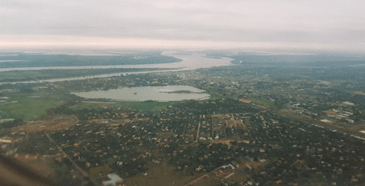
Phnom Penh 1987, estimated population 700,000 (Marilyn Garson)
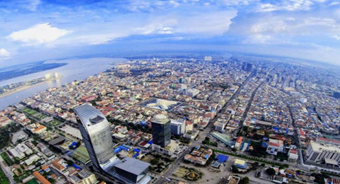
Phnom Penh today, population 2,078,000 (Image: Eleven Myannmar)

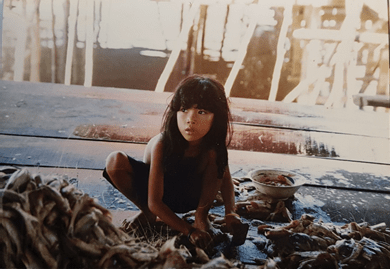
We have done this before. Seeing genocide—millions of Cambodians dead and millions of starving survivors—Aotearoa has chosen the wrong side of history in order to assure American-led allies that we shared their priorities. I saw the cost while travelling and working with Cambodian survivors. Now, again, Aotearoa is content to follow a criminal American agenda.

Cambodia, 1979 – 1990

Cambodia sits between the regional powers of Vietnam and Thailand. The US regarded Cambodia as an adjunct to their war in Vietnam. From the late 1960s, President Richard Nixon authorised a secret, escalating bombardment of neutral Cambodia.

I was a child then, but I knew there was something I needed to learn in Cambodia. I studied, from the mid-1980s I travelled and then I worked in Cambodia to understand what had happened. Every Cambodian I knew who joined the Khmer Rouge, explained that they had been radicalised by the bombing. That unreachable rain of violence was intolerable.

Embittered and extremist, the Khmer Rouge took power in 1975. They sealed off Cambodia, emptied the cities and reduced their country to a forced-labour camp. The world did nothing for four years, while the Khmer Rouge committed unfathomable crimes. They killed, starved or worked to death up to 2,000,000 people, a fifth of the population.

In late 1978, ostensibly responding to Khmer Rouge cross-border raids, Vietnam invaded Cambodia and overthrew the Khmer Rouge. Vietnam installed a compliant Cambodian government led by Heng Samrin. Stories tumbled forth of the most profound suffering and trauma. A loyal remnant of the Khmer Rouge retreated into camps along the Thai border. Many others took off their uniforms and disappeared into the crowds of Cambodians who were searching for relatives, walking toward their abandoned cities or villages; walking – and not planting.

The Khmer Rouge had dragged Cambodia back to a pre-industrial state. It was the poorest place on earth, its people hungry and grieving in darkness, its infrastructure shattered. There were no reserves of food. Famine quickly set in.

The Tonle Sap inland lake was, and remains, a primary source of protein (Marilyn Garson)

The regional ASEAN group of states and the US led the response to Cambodia’s occupation and famine. Thailand wanted a buffer between itself and Vietnam, and the Khmer Rouge camps offered that buffer. The US wanted to punish Vietnam for humiliating America at war four years earlier.  They aimed to ‘bleed Vietnam dry’ with the burden of feeding millions of starving Cambodian survivors in addition to its own population. Genocide? According to diplomatic cables and notes cited here, former Thai Foreign Minister Siddhi Savetsila explained during a visit to New Zealand in February 1981 that genocide was “for the people of Cambodia to deal with, not Thailand and not Vietnam.”

Genocide was not our concern either.

We, Aotearoa, loyally adopted ASEAN’s agenda. For twelve years, we recognised the Khmer Rouge genocidaires as the rightful representatives of Cambodia. We provided infrequent, small amounts of humanitarian aid to the Khmer Rouge-controlled “bamboo ghetto” camps.  We withheld recognition from Cambodia’s government, and we did nothing to meet the most basic rights of Cambodians to food, justice, self-determination, and safety.  

A few Western states chose principle. Australia and the UK swiftly de-recognised the Khmer Rouge, and a few countries did aid Cambodia.

In just the first year of ASEAN’s aid embargo, Counting Civilian Casualties estimates that 300,000 Cambodians died from starvation-related causes. Through the 1980s, one in five Cambodian children died in their first five years. I visited and wrote about people whose suffering did not break the surface of the world’s concern.

In the countryside, a few NGOs struggled to feed the Cambodians who languished in inland camps between two armies.  Ben Pringg camp, between Battambang and Pailin, was within artillery range of the Khmer Rouge. A woman there explained to me that they had eaten their rice seed and were again hungry. They knew that they were consuming the year’s potential crop – but with nothing else to eat, they would all have starved before the rice grew.  The Khmer Rouge (our guys) shelled the NGO trucks that tried to deliver food. 

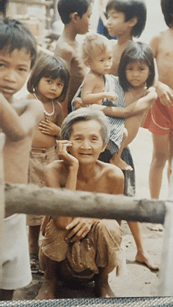
Ben Pringg camp residents (Marilyn Garson)

As a donor state, we must have understood that our aid choice contributed to massive, avoidable human suffering. Sending aid into an environment of scarcity alters its balance of power. In famine, food is a magnet. I recall any number of Cambodians who told of their losses and then mused about conditions at the Thai border. If they wanted to seek food, they had to seek out the Khmer Rouge who controlled it.[1] 

Denied aid and trade in the name of politics, Cambodia remained the poorest place on earth a full decade after the Khmer Rouge fell, with an annual per capita GDP of $40 US.  It also became the most heavily mined ground on the planet.

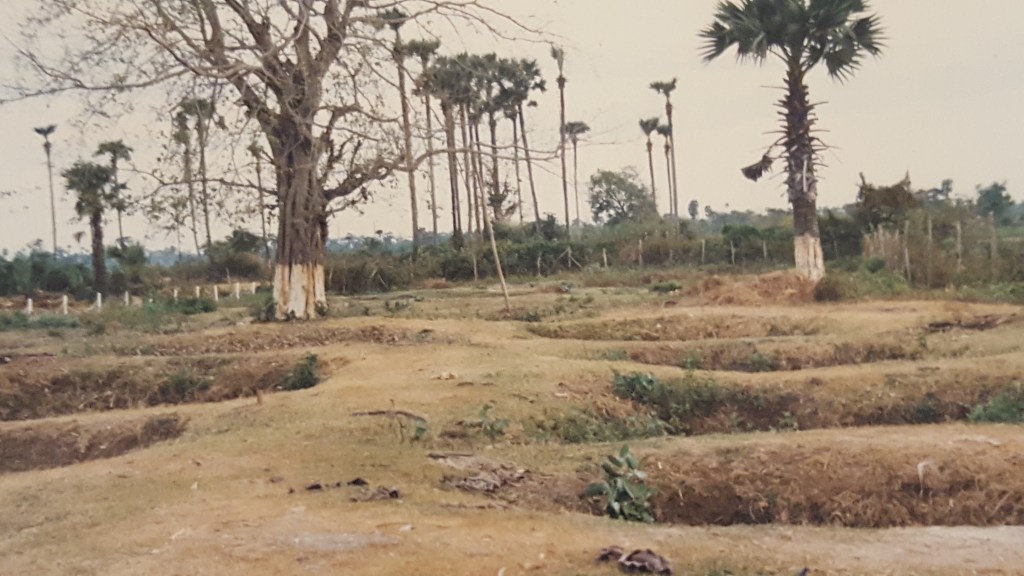
excavating the killing fields near Tuol Sleng (Marilyn Garson)

In histories like The Devil You Know: New Zealand’s Recognition Policy Towards Cambodia From 1978 – 1990, successive NZ Foreign Affairs Ministers’ reiterate that our Cambodia policy demonstrated our reliability as an ASEAN ally. Our loyalty led us into absurdity as we pursued a policy whose logical outcome – the return of the Khmer Rouge to power – we did not want.  We adhered to the ASEAN line until 19 July, 1990. By then the Vietnamese had departed. The US had withdrawn its recognition from the Khmer Rouge-led coalition. Further from the headlines, Cambodia’s civil war sputtered on for another pointless decade.

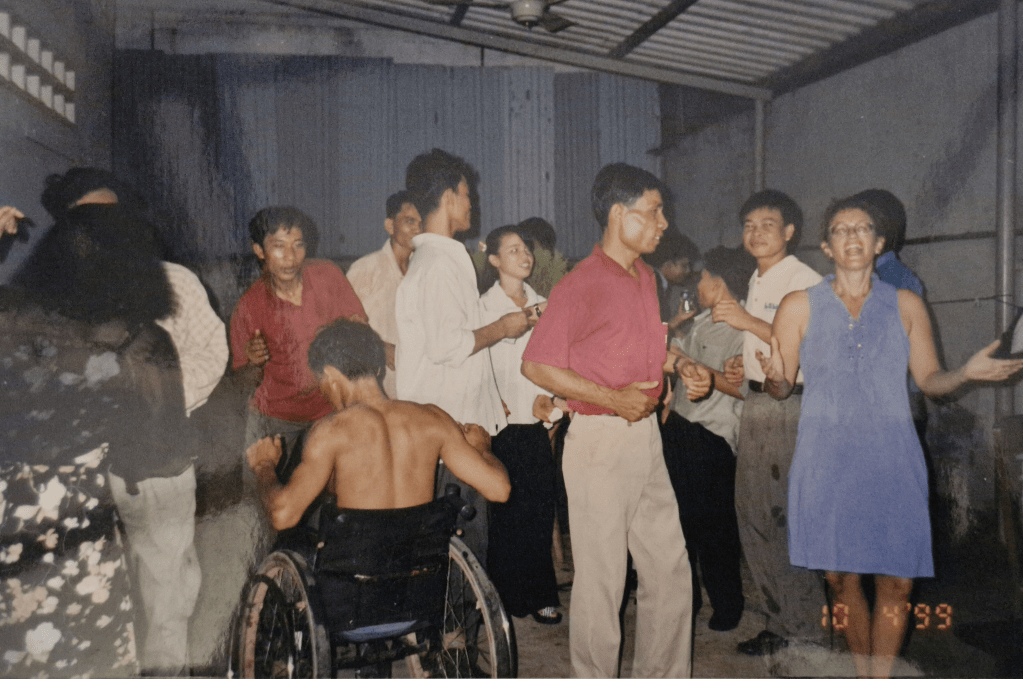
Leading an NGO staffed by Cambodians with disabilities, I heard Cambodia’s story narrated primarily by people who survived the genocide as children. The men had been child soldiers in all of the armies, and most of my colleagues had lost limbs to landmines. They explained the meaninglessness, the fatuousness of war. They felt fated; fighting was just something they were told to do. They recalled that, when units of opposing armies stumbled upon each other in the jungle, they would first try to back away, hoping to avoid conflict by mutual, unspoken agreement.

While I worked on my Khmer literacy, I often read the local papers with colleagues who were also struggling to master Cambodia’s esoteric alphabet.  Once we read a story about an aspiring criminal who gave his followers a gun and $20. I turned to the man sitting next to me and asked him if he would join. He shrugged, “If someone gives me a gun and pays me then I have to fight.”

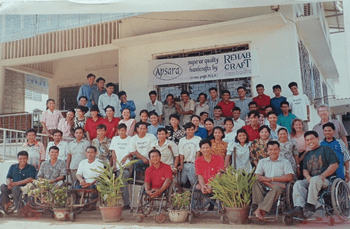
Rehab Craft Cambodia farewells its founder, the late Colin McLennan (Marilyn Garson)

My colleagues had been exposed to the most heartless power. Policies like ours helped to convince them that they would always remain unprotected.

Our choices in Cambodia highlight the harm we have done as a follower-state. If we were ever going to act on principle, we should have done it when we faced the stark choice to align with the genocidaires or their survivors. We were a willing part of a regime of power built on the suffering of a powerless nation. That sort of stability is anathema to justice or to any durable peace.

Here we are again, pursuing a policy in Palestine whose logical outcome (the erasure of a nation and its state; a world of impunity, devoid of civilian protection and law) we say we do not want. To paraphrase the Thai Foreign Minister’s 1981 comment, we act as if Israel’s crimes need not be our concern – and again, we cling to that stance even as most of our colonial allies find it too absurd and offensive to maintain (in word if not yet in action).

If we want to end genocide – to end Israel’s genocide and prevent others that will take Israel’s crimes as their precedent – we need policy that values life. Some people scoff at the very idea of values-led policy. They call it naive. I ask them whether our policies in Cambodia or Palestine, unanchored by values, look sophisticated. Or independent.

The wealthy states bring a computational theory to the transformational issues around us. They calculate how little they must give up in order to keep the killing out of the headlines. But we face issues which will not be resolved at the margins.

The UN marks Genocides Remembrance and Prevention Day on December 9. If we are to end this genocide and prevent future genocides, we need to change the conditions that allow genocide. We need to change the politicans who trot along after those who have brought us all to the cliff’s edge. In the coming election, we need to vote for life, planet, Te Tiriti and radical foreign policy ambitions, around which to galvanise new networks of shared purpose.

Marilyn Garson

(Portions of this text were posted in a different form in December 2021.)


[1] On the limbo of war economy, see the work of Mark Duffield. On humanitarian donorship practice, see initiatives like the Overseas Development Institute’s Good Humanitarian Donorship. On the specifics of the Cambodian aid embargo, see for example Punishing the Poor, which Oxfam has made freely available here.

We support Palestinian rejection of Trump’s plan for Gaza.

Global Jews for Palestine media statement 22/11/2025

The UN Security Council’s approval of a revamped Trump plan for Gaza has sparked sharp condemnation from Palestinian resistance groups, who say it sidesteps international law, imposes external control on Gaza, and aims to rescue Israel’s failing colonization while disarming the resistance. A global coalition of 25 anti-Zionist Jewish organizations echoes this rejection, calling the resolution a political lifeline to Netanyahu’s regime and a betrayal of Palestinian self-determination.

UN Security Council votes Trump´s plan against the Palestinians. It´s an attempt to rescue Israel’s colonization of Gaza and to disarm the resistance


On 17 November 2025 the United Nations Security Council approved a US resolution on Gaza. Palestinian resistance groups quickly issued a joint rejection of this version of the ‘Trump Peace Plan.’ They said:  “The resolution bypasses international frameworks and paves the way for creating arrangements outside the Palestinian national will. Any international force intended to be deployed in Gaza in the proposed form will turn into a form of guardianship or imposed mandate, undermining the Palestinian people’s right to self-determination.” As a global coalition of 25 anti-Zionist Jewish groups, we fully support the Palestinian claim and struggle for self-determination and the right of return. We also reject Trump´s plan, now endorsed by the UNSC.

This sordid role should be no surprise. As the Palestinian human rights organisation Al-Haq had warned beforehand, the impending vote would demonstrate “the Security Council’s manifest abdication of its responsibility, and the further undermining and rejection of Palestinian self-determination.”

The ‘Peace Plan’ continues the US-Israel agenda to remove Palestine from any international legal framework in order to re-inforce Israel’s colonization. Now that Israel’s army has greater difficulty in maintaining its colonial control on the ground, the UNSC resolution rescues Netanyahu´s colonial regime and aims at disarming the anti-colonial resistance. The Palestinians have had no say whatsoever in this . 

Among Palestinians, only the Palestinian National Authority, desperate to retain its privileges through its collaboration with Israel, welcomed this travesty. All UNSC members voted for the resolution, except for shameful abstentions by China and Russia,rather than using their veto power. This UNSC resolution is a total betrayal of international law, human rights and the Palestinian struggle.   

What does this mean for the UN’s role? Its Special Rapporteur on the Palestinian Territories, Francesca Albanese, has admirably gone further than her predecessors, especially by documenting the complicity of major countries and companies in her October 2025 report, Gaza Genocide: a Collective Crime.

The ICJ and ICC have diligently carried out their tasks, documenting Israel’s genocide and its leaders’ criminal responsibility. However, the UNSC continues the complicit legacy of the 1947 resolution partitioning Palestine. After the 1936-39 joint UK-Zionist counterinsurgency war severely weakened Palestinians’ defence against Zionist colonization, the Partition plan opened the way for further attacks and expulsions.

These developments further vindicate the call in 2005 by over 170 Palestinian civil society organisations for a comprehensive BDS campaign against international complicity with Israeli colonisation, firstly in our own countries. We are inspired by the action of dockers who have blocked arms shipments to Israel during the past two years. More recently, Italy’s mass strikes and demonstrations have opposed its complicity with Israel. Palestine’s most reliable supporters are the people of the world who fight their own oppression for a common future of social justice. Palestine’s resistance remains a symbol of that global struggle.

Global Jews for Palestine will participate in all demonstrations around the world on 29 November, the International Day of Solidarity with the Palestinian People. It is not the time to abandon the streets.


Read this statement on our website

GLOBAL JEWS FOR PALESTINE

————————–

We are Jews from many countries, who are members of local, national and international networks and organizations. We are multi-ethnic and multigenerational and our members embrace a broad range of viewpoints on Jewish religious and ethical traditions. We are connected by our involvement in the struggle for Palestinian rights, and by our determination to work for justice. We oppose Zionism and all forms of racism and colonialism.

We believe that it is our particular responsibility to challenge Jewish organizations whose alliances and actions undermine Palestinian human and national rights, promote Jewish exceptionalism, and overturn Jewish social justice traditions. At the heart of our work is the fight for Palestinian liberation and the struggle for a world free of racial and ethnic hierarchy, colonial domination, and unbridled militarism.

How shall we speak now?

How shall we speak and act now?

For six years, Alternative Jewish Voices has spoken in an aspirational voice. This is intentional. Research shows, the voice that mobilises new political engagement is a voice of moral clarity which invites others to join the work of making a better world.

We ground our voice in facts, and today’s facts are shattering. We share the outrage that we hear. However, outrage alone does not make change. It has to be channeled forward into principled action.

Hope is resistance. AJV met this week to ask where we find that hope now, while grief and anger feel overwhelming.

With unprecedented Western permission and complicity, Israel’s genocide is ongoing. The IDF has killed more than 70,000 Palestinians and decimated the built environment of Gaza. They are queueing up more of the same in the West Bank. The tonnage of IDF poisons will affect generations. Israel has killed 271 and injured 622 Palestinians since the ceasefire. Gazan Palestinians are living in atrocious conditions as winter closes in. Israel is preventing UN agencies and NGOs from responding, despite the International Court of Justice’s October finding that Israel is obligated to provide for Gazan Palestinians and not to impede others from doing so. Along the way, Israel has bombed half a dozen countries which are not at war with it.

The silence of governments like ours imagines this dystopia as a new baseline. They will settle for negotiating the speed of Israel’s new crimes against the survivors of Palestine.

We utterly reject their selective amnesia—but each time we call out our complicit government, we need to call them forward and judge them against something better.

We do that by placing the value of human life at the centre of our understanding. People have laboured for a century and a half to embed a rights-based vision of human dignity and equality. Rights are not an opinion; rights are the basis of international law and institutions. That today’s governments spit on Palestinians’ rights does not invalidate Palestinians’ rights. It raises the stakes. Now we must fight for the vision even as we wield it.

Our baseline is a world in which people flourish with their basic needs and dignity ensured. We protest the deficits from that standard. We judge Israel and its powerful accomplices against the standard of an accountable, just peace for all who live between the river and the sea.

Even as our allies have taken the step of recognising Palestine, Luxon, Seymour and Peters cosy up to Donald Trump. We are reeling from their daily erosion of our democracy. Our government’s position on Palestine and the value it places on our own lives follow from a single agenda. This government is harming far more people than it is benefiting. We find hope in the work that brings together a majority for change.

While Palestine has become the cement of a broad global movement, Zionism is shifting. Israel used its years of Zionist-Jewish permission to consolidate new sources of support. It is no longer dependent upon Jewish social license. Christian Zionism, long the majority of Zionism, is now an insider shaping American policy. Israel dedicates new budgets to influencing American Christians.

Christian Zionist influence is now being unsettled in turn by the far Right, as Zionism attracts support from the eschatological, racist and fascist extremes. Trump’s MAGA world is grappling with the rise of more radical White racist nationalism. Those extremists are seeking narrative position and influence.

In Aotearoa, Israel’s deputy foreign minister has met with Christian nationalist Brian Tamaki and Alfred Ngaio. There are five rabbis in this country, while 130 Christian Zionist clergy wrote together of their representatives’ time with Winston Peters before Peters declined to recognise Palestine. In order to lend effective support to the liberation of Palestine, our protest needs to target the evolving structures and financial flows of Aotearoa’s Zionism.

This does not relieve the Zionist-Jewish community of responsibility. Globally, Zionist-Jewish institutions have eagerly wrapped Israel’s violence in the guise of Jewish identity, in order to place Israel’s genocidal actions beyond challenge. Aotearoa’s Zionist-Jewish spokespeople still imagine only the peace of the graveyard, after which there might be a nicer Zionism.

A significant segment of Liberal-Zionist Jews seems to have turned against the war—although not against Zionism. That speaks to some capacity for change despite the institutions.

We welcome every effort to end this genocide. However, as principled anti-Zionists our goal is greater than the cessation of firing. In our own community and in Palestine, we must change the conditions that give rise to genocide. We need to decolonise the Jewishness that taught us to stake our future on the oppression and slaughter of others. There is no nicer Zionism.

To realise a liberatory Jewishness, we need new institutions with genuinely new communal leadership. We work for a future without Jewish supremacy or exceptionalism. Two-thirds of Jewish New Yorkers aged 18-44 just voted for Mayor Mamdani in one such act of qualitative, visionary change.

We will not displace this toxic new Right power by emulating their perpetual outrage. That would only turn us into the thing we oppose. Outrage alone leaves one numb with grief and alienation. It stokes the identity politics which deny that we can live together. It leads to the despair which hardens the status quo.

We will only displace this power with an aspirational, broadly based vision of something better. We learn from the long, great works of our time: the works of peace, Indigenous rights, the common cause of dignified life in the hardest places.

That quality of holistic movement has coalesced around Palestine. We have never heard so many people acknowledge that the change must reach to the tangled roots of colonisation, racism, capitalism and fascism.

AJV brings to this our Jewish inheritance which recognises that social, ecological and material justice are inextricable. Together we will place life and justice at the centre of the work that needs doing, here and there.

In this dark time, hope is resistance and these are our ways forward.

In outrage and in aroha, we are Alternative Jewish Voices of Aotearoa

Israel says, “You cease – we fire!”

Media release from Global Jews for Palestine, Nov 9 2025

globaljewishcollective@gmail.com

Israel says, “You cease, we fire!”

Ceasefire means that the firing ceases. By October 29th, at least 211 Palestinians had been killed and nearly 600 injured in 125 ceasefire violations by Israel since a ceasefire was declared, as outlined by Al Jazeera. No Israelis had been killed.

In the deadliest 24 hours since the “ceasefire” began, Israel claimed it hit more than 30 targets. Israel claimed that the targets were “terrorists in command positions within terror organisations”. However, the world (again) saw babies, children and other civilians being pulled from the rubble, dead or destined for hospitals which lack the capacity to assist them.

Mainstream Western media continue to highlight Israel’s allegations, giving far less time to its many violations of the agreement.  There have been no repercussions against Israel for its violations, as it continues to occupy 58% of the Gaza Strip, moving the gangs it has supported behind the “line” and shooting Palestinians who cross that ill-defined invisible line. 

While Hamas is blamed for the slow return of the bodies of Israeli hostages, Gaza does not have the forensic equipment needed for examining human remains extracted from rubble.Israel is denying access for the machinery that is needed to lift the rubble and recover the many bodies that lie buried. The great majority of the people whose bodies await recovery beneath that rubble are Palestinian.

Not only does the “peace” promised by Donald Trump feel a long way off, but even the desperately needed respite is proving elusive for Palestinians. As is food: Israel continues to violate the ceasefire agreement which promised a minimum of 600 trucks filled with aid each day. Palestinians continue to go hungry. They await medical treatment. They live in dire conditions, many still in need of shelter, as winter arrives.

Our governments have immediate obligations. We must not normalise or support this illegal regime, and we must act to protect and save lives. We call on all our governments to expel the local Israeli ambassador; recall their own ambassador from Israel; end all arms sales; and impose sanctions on Israel until it ends the genocidal war on the people of Gaza, stops ethnic cleansing and settler violence in the West Bank, and commits to full equality and justice for Palestinians in accordance with all Palestinian rights under international law. 

We also call on our governments and legacy media to stop conflating Israel with Jews or Zionism with Judaism.  Israel’s claim to act in the name of the Jews of the world, to weaponise antisemitism and exploit the Holocaust of our people for genocidal ends must be rejected!

Read this statement on our website

GLOBAL JEWS FOR PALESTINE

————————–

We are Jews from many countries, who are members of local, national and international networks and organizations. We are multi-ethnic and multigenerational and our members embrace a broad range of viewpoints on Jewish religious and ethical traditions. We are connected by our involvement in the struggle for Palestinian rights, and by our determination to work for justice. We oppose Zionism and all forms of racism and colonialism.

We believe that it is our particular responsibility to challenge Jewish organizations whose alliances and actions undermine Palestinian human and national rights, promote Jewish exceptionalism, and overturn Jewish social justice traditions. At the heart of our work is the fight for Palestinian liberation and the struggle for a world free of racial and ethnic hierarchy, colonial domination, and unbridled militarism.
_____________

Alternative Jewish Voices is a member of Global Jews for Palestine

When genocide defenders visit

J-Wire is reporting that Israel’s Deputy Foreign Minister Sharren Haskell will slip into Auckland this weekend, quietly as a thief in the night. Winston Peters has been known to set his diplomatic encounters to music, but not this one.

If you’re not familiar with Heskell, here is her calling card.

Recall that this week’s Advisory Opinion by the International Court of Justice unanimously found that:

the State of Israel, as an occupying Power, is required to fulfil its obligations under international humanitarian law. These obligations include the following: … to ensure that the population of the Occupied Palestinian Territory has the essential supplies of daily life, including food, water, clothing, bedding, shelter, fuel, medical supplies and services.

Now watch as Haskell calmly justifies bombing the Al Shifa and Nasser hospitals in Gaza.

Our government makes threadbare comments about law and humanitarian concern. Then they issue a visa to a front-row proponent of Israel’s genocide. Token words, followed by acts of complicity and permission.

And what will Israel’s genocide defender be doing in Aotearoa? According to J-Wire, she will be shoring up business ties with anyone willing to forget that on July 19, 2024, the International Court of Justice admonished all states not to normalise, support or perpetuate Israel’s illegal occupation.

The profitable business ties that Heskell seeks are precisely those that the court has told us to end. Heskell’s visa mocks the tens of thousands of New Zealanders who have taken to the streets for law and justice.

To our disgust, she will also be bolstering Israel’s ties with the Zionist-Jewish community. Every one of our Jewish institutions has failed to condemn Israel’s genocide and call for Israel’s accountability. They have failed to value non-Jewish lives. For any Jewish institution to invite or interact with a minister of the Israeli government (whose leaders are wanted for genocide) is a Shonda – a shame of scandalous proportions.

We are a collective of Jewish New Zealanders from the Far North to Dunedin. On the day that Israel elected a pack of butchers, the tone of our statements changed. Israel’s current government did not represent a new direction of travel, but it manifestly did represent an escalation of the violent madness that has rampaged through occupied Palestine for more than two years. Our world has been altered by the experience of witnessing slaughter while being governed by its accomplices.

We reject utterly the boards, the decision-makers of Jewish institutions who have stayed silent and passive through two years of annihilation. We need new institutions.

The same goes for a government that mumbles about the rights of human beings and the laws of states while carrying on normal diplomatic and economic relations with the state of Israel. If we want that to change, we must change our government.

Sanction Israel. Suspend normal relations. Support war crimes investigations.

Recognise the state of Palestine. Demand the immediate, sufficient and unimpeded provision of humanitarian supplies by the UN and NGOs.

End the illegal occupation which is the cause of this carnage.

Alternative Jewish Voices

Peace is more than the cessation of fire

Image: Barbara808

We welcome the cessation of firing with so many emotions. We are relieved for each Palestinian family who knows that their relatives can sleep in safety, even as we are horrified by the devastation around them. We are indignant that Palestinians have been forced to choose between such a neocolonial plan—a plan to give Israel what it wants at the expense of law and justice—and ongoing starvation and annihilation.

Israel’s onslaughts have never really ended in Gaza. There have been cessations of bombing, and plans which were not meaningful beyond their first few bullet points. Bombing has been suspended, and Gaza has lived in the interim between attacks. But peace? Peace is built upon justice, and Gazans have enjoyed none of that.

We know all of the reasons for cynicism and rejection, but we will not give in to them. Our role is to support Palestinians in their choices, to share in their best hopes and stand by them while they begin to feel everything that had been postponed by the hourly desperation of 732 days of genocide.

Even in these very first days, we also know that an urgent task lands on all of our shoulders. Donor states have historically delivered only a small fraction of their grand pledges for Gaza’s recovery. In the twelve months after the bombardment of 2014, donors sent just 6% of their recovery pledges. They said that they wanted to see if the quiet would last. Their stance ensured that Gaza’s deprivation continued.

That absolutely must not happen again. Winter is approaching. Gazan Palestinians need warm shelter and blankets, food and water, medications and baby supplies. They need machinery to search for their loved ones who lie beneath the rubble of their homes. They need functioning health, education and food distribution infrastructure to replace what Israel has so mercilessly destroyed. Experts must be granted entry to Gaza to document Israel’s crimes and begin the essential work of holding Israel to account.

Gaza needs all this, and they need it now. Winter is coming. Securing actual donor-state contributions to deliver essential supplies, in sufficient quantities: this is an immediate task for our advocacy.

Alternative Jewish Voices