We share Ben Kepes’ emphasis on clear language, and so we object to his unclear inferences in today’s Stuff OpEd.
Ben Kepes doesn’t mention which of MP Golriz Ghahraman’s protests offended him. We can only reply on the basis of our own experience. We are aware of two protest actions to which he might refer. Perhaps they were typical. 12 Green MPs stood on the steps of Parliament in May, to protest Israel’s bombardment of Gaza and request Parliament’s recognition of the State of Palestine. MP Ghahraman hosted an evening at Parliament to highlight Israel’s illegal detention of Palestinian children in its military jails.
We spoke at both of those events. Neither the Holocaust nor antisemitism were themes. Thus far, Kepes rather than Ghahraman is linking the Holocaust with Palestine. Please cite specifics or leave Ghahraman out of your argument.
Do loudly decry the use of Holocaust or Nazi references to protest COVID public health measures. We agree that those references are wildly inappropriate, designed to shock and sadly to normalise extremism. COVID disinformation took root and was cultivated offshore, long before it was grafted onto our issues. It is absurd to link or source this to the Green Party of Aotearoa.
To protest that offensive language, you need the addresses of Donald Trump, Q-Anon and co. We’re with you in that protest when it is properly directed.
Finally, in the interests of precision please correct your language. Gazan Palestinians are not being “treated… poorly” or “subjugated.” Their land is occupied, and two million human beings live behind a blockade instituted by one of the most powerful armies on the planet. They live deprived of their most basic human rights. Read a current, comprehensive summary by the UN Special Rapporteur A/76/433.
As profoundly as you feel protective of the truth of your family’s experience in the Holocaust, you must not do a disservice to Palestinians’ equal human rights: the right to life and medical treatment, freedom to move, collective self-determination. Please make your point without discrediting the protest of others. Your memory and their daily reality are not in competition.
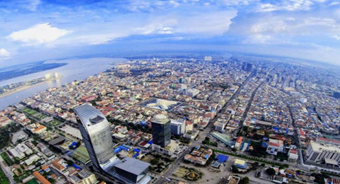
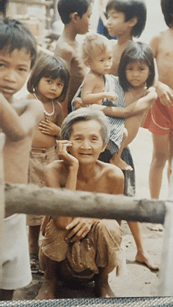
Phnom Penh today, population 2,078,000 (Image: Eleven Myannmar)
When we speak about foreign policy, we like to say that Aotearoa punches above its weight. Our independent foreign policy is a national mantra. We have indeed taken progressive positions on some big issues. However, in between our proud moments, we have also been complicit in some of our allies’ least principled actions. I saw the cost while travelling and working under two occupations – first in Cambodia and last in Gaza, Palestine. At those two extremes of violence and deprivation, Aotearoa timidly followed our allies’ agendas.
We will need to reckon with this part of our legacy as we determine our policy on challenges like climate change.
Cambodia, 1979 – 1990
Cambodia sits between the regional powers of Vietnam and Thailand. The US regarded Cambodia as an adjunct to their war in Vietnam. From the late 1960s, President Richard Nixon authorised a secret, escalating bombardment of neutral Cambodia.
I was a child then, but I knew there was something I needed to learn in Cambodia. I studied, from the mid-1980s I travelled and then I worked in Cambodia to understand what had happened. Every Cambodian I knew who joined the Khmer Rouge, explained that they had been radicalised by the bombing. That unreachable rain of violence was intolerable.
Embittered and extremist, the Khmer Rouge took power in 1975. They sealed off Cambodia, emptied the cities and reduced their country to a forced-labour camp. The world did nothing for four years, while the Khmer Rouge committed unfathomable crimes. They killed, starved or worked to death up to 2,000,000 people, a fifth of the population.
In late 1978, ostensibly responding to Khmer Rouge cross-border raids, Vietnam invaded Cambodia and overthrew the Khmer Rouge. Vietnam installed a compliant Cambodian government led by Heng Samrin. Stories tumbled forth of the most profound suffering and trauma. A loyal remnant of the Khmer Rouge retreated into camps along the Thai border. Many others took off their uniforms and disappeared into the crowds of Cambodians who were searching for relatives, walking toward their abandoned cities or villages, walking – and not planting.
The Khmer Rouge had dragged Cambodia back to a pre-industrial state. It was the poorest place on earth, its people hungry and grieving in darkness, its infrastructure shattered. There were no reserves of food. Famine quickly set in.
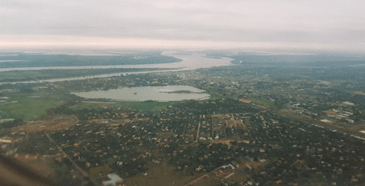
The Tonle Sap inland lake was, and remains, a primary source of protein (Marilyn Garson)
The regional ASEAN group of states and the US led the response to Cambodia’s occupation and famine. Thailand wanted a buffer between itself and Vietnam, and the Khmer Rouge camps offered that buffer. The US wanted to punish Vietnam for humiliating America at war four years earlier. They aimed to ‘bleed Vietnam dry’ with the burden of feeding millions of starving Cambodian survivors in addition to its own population. Genocide? According to diplomatic cables and notes cited here, former Thai Foreign Minister Siddhi Savetsila explained during a visit to New Zealand in February 1981 that genocide was “for the people of Cambodia to deal with, not Thailand and not Vietnam.” By extension, genocide was not our concern either.
We, Aotearoa, loyally adopted ASEAN’s agenda. For twelve years, we recognised the Khmer Rouge genocidaires as the rightful representatives of Cambodia. A succession of coalitions and acronyms failed to convince anyone (except our diplomats) that the Khmer Rouge had been rehabilitated or shared power in their border camps. We provided infrequent, small amounts of humanitarian aid to those Khmer Rouge-controlled “bamboo ghettoes.” We withheld recognition from the Heng Samrin government, and we did nothing to meet the most basic rights of Cambodians to food, justice, self-determination, and safety.
We could have chosen principle over loyalty, as some others did. Australia and the UK swiftly de-recognised the Khmer Rouge, and a few countries did aid Cambodia.
In just the first year of ASEAN’s stability regime, Counting Civilian Casualties estimates that 300,000 Cambodians died from famine. Through the 1980s, one in five Cambodian children died in their first five years. I visited and wrote about the people whose suffering did not break the surface of the world’s concern.
In the countryside, a few NGOs struggled to feed the Cambodians who languished in inland camps between two armies. Ben Pringg camp, between Battambang and Pailin, was within artillery range of the Khmer Rouge. A woman there explained to me that they had eaten their rice seed and were again hungry. They knew that they were consuming the year’s potential crop – but with nothing else to eat, they would all have starved before the rice grew. The Khmer Rouge shelled the NGO trucks that tried to deliver food.
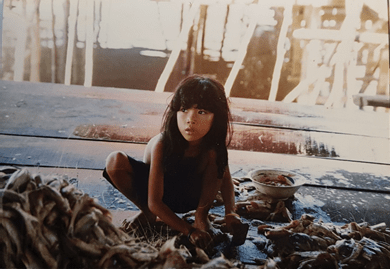
Ben Pringg camp residents (Marilyn Garson)
As a donor state, we must have understood that our aid choice contributed to massive, avoidable human suffering. Sending aid into an environment of scarcity alters its balance of power. In famine, food is a magnet. I recall any number of Cambodians who told of their losses and then mused about conditions at the border, weighing the availability of food and the possibility of flight against the certainty of encountering the Khmer Rouge.[1]
Denied aid and trade in the name of politics, Cambodia remained the poorest place on earth a full decade after the Khmer Rouge fell, with an annual per capita GDP of $40 US. It was also becoming the most heavily mined.
In histories like The Devil You Know: New Zealand’s Recognition Policy Towards Cambodia From 1978 – 1990, successive NZ Foreign Affairs Ministers’ reiterate that our Cambodia policy demonstrated our reliability as an ASEAN ally. Our loyalty led us into absurdity as we pursued a policy whose logical outcome – the return of the Khmer Rouge to power – we did not want. We adhered to the ASEAN line until 19 July, 1990. By then the Vietnamese had departed. The US had withdrawn its recognition from the Khmer Rouge-led coalition. Further from the headlines, Cambodia’s civil war sputtered on for another decade.
Leading an NGO staffed by Cambodians with disabilities, I heard Cambodia’s story narrated primarily by people who survived the genocide as children. The men had been child soldiers in all of the armies, and most of my colleagues had lost limbs to landmines. They explained the meaninglessness, the fatuousness of war. They felt fated; fighting was just something they were told to do. They recalled that, when units of opposing armies stumbled upon each other in the jungle, they would first try to back away, hoping to avoid conflict by mutual, unspoken agreement.
While I worked on my Khmer literacy, I often read the local papers with colleagues who were also struggling to master Cambodia’s esoteric alphabet. Once we read a story about an aspiring criminal who gave his followers a gun and $20. I turned to the man sitting next to me and asked him if he would join. He shrugged, “If someone gives me a gun and pays me then I have to fight.”
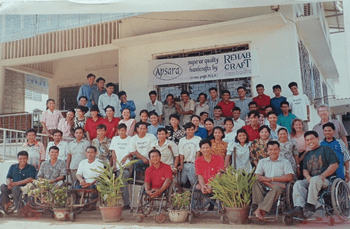
Rehab Craft Cambodia farewells its founder, the late Colin McLennan (Marilyn Garson)
My colleagues had been exposed to the most heartless power. Policies like ours, disinterested in justice, helped to convince them that they would always remain unprotected.
Our choices in Cambodia highlight part of New Zealand’s foreign policy legacy. Our history as a follower has done great damage. If we were ever going to act on principle, we should have done it when we faced the stark choice to align with the genocidaires or their survivors. We prioritised the interests of states whose stability was built on the suffering of a powerless nation. That sort of stability is anathema to justice or to any durable peace.
I went on to work five years in Afghanistan and I cannot help but hear the echoes. Today, some of the same allies prioritise the isolation of the Taliban, at the direct expense of 23 million Afghans who face starvation this Northern winter. States call it a diplomatic dilemma. The World Food Programme calls Afghans’ plight “hell on earth.”
Gaza, Palestine
A quarter-century later, I lived in the Gaza Strip from 2011 through 2015. I worked with family businesses, job-seekers and (unexpectedly) as a member of the United Nations emergency team that sheltered one-sixth of Gaza’s population through the bombardment of 2014. In Israel’s occupation of Palestine, Aotearoa again serves regional, powerful state interests, and overlooks the suffering and rights of an occupied nation.
To be clear, I am not comparing the Khmer Rouge genocide with Palestinians’ decades under settler colonial occupation. Nor is this about Vietnam or Israel per se. I am writing about New Zealand’s willingness to be led into absurdity, and our ongoing use of aid to buttress bad policy.
The UN Security Council and General Assembly, international courts, the Red Cross, legal and human rights NGOs – the overwhelming preponderance of international institutions – agree that the West Bank, east Jerusalem, the Gaza Strip and the Golan Heights are Occupied Palestinian Territories (OPT). International Humanitarian Law and the laws of occupation apply in full. This includes Gaza. The standard for occupation is “effective control.” Israel’s military, economic, social and technological blockade effectively controls the Gaza Strip and the two million people who live behind blockade walls. Israel disagrees.
Israel’s annexations of East Jerusalem and the Golan Heights are illegal because it is illegal to annex occupied territory. UN Resolution 478 declares the annexation of East Jerusalem illegal while UN Resolution 497 covers the Golan Heights. Donald Trump disagreed and recognised Israel’s actions. Repeated UN Resolutions and successive New Zealand governments have reiterated that Israel’s settlements in the West Bank are also illegal.
Israel consistently ranks among the most militarised nations on earth. Decades of American military aid “unmatched by any other bilateral relationship in the world,” have made Israel a leading military and cybersecurity power, and weapons exporter. Between 9 January, 2009 and 31 October, 2021, 3624 Palestinians were killed by Israelis, while 196 Israelis were killed by Palestinians: the casualties of the occupation are overwhelmingly Palestinian.
The UN Special Rapporteur summarised in October, “Israel is in long-standing breach of … foundational [legal] principles, with its occupation having crossed a bright red line into illegality under international law…. Israel is a bad-faith occupier.”
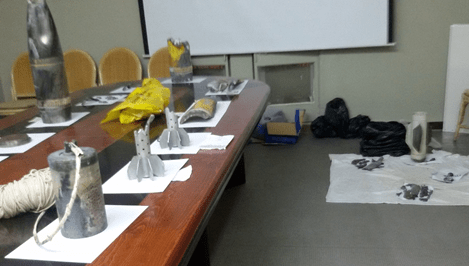
Categorising bomb fragments removed from a Beit Hanoun school, bombed in July 2014 while it was in use as a shelter for displaced Gazans. Investigation attributed the bombing to the IDF. This is among the acts that the International Criminal Court will investigate as prima facie war crimes. (Marilyn Garson)
Although we tolerated the Khmer Rouge rather than the occupation of Cambodia, in Israel-Palestine we recognise only the occupier, Israel. 138 United Nations member states also recognise the State of Palestine.[2] We do not recognise the occupied State of Palestine because, Foreign Minister Nanaia Mahuta writes, “it lacks sufficient control of its territory to constitute a state.” (Correspondence in response to a joint briefing by Justice for Palestine and Alternative Jewish Voices, Dec 14, 2020)
Well, yes, occupation is the violent denial of territorial sovereignty. New Zealand did, however, recognise the odious Khmer Rouge, which controlled neither significant territory nor the best interests of their nation.
As a state, Israel presents its case to our government within normal diplomatic relations. Palestinians lack the representation or the access to speak.[3] Imagine how differently we might respond, if we understood that occupation is, first, the lived story of the occupied people.
We tolerate an occupation that is increasingly called apartheid. We acknowledge the illegality of Israel’s settlements, but we do not penalise breaches of law, treaties, or conventions.[4] We have not acted on Israel’s military incarceration system with its 95% conviction rate, nor do we penalise Israel for routinely imprisoning children in military facilities – the only state to do so, in breach of the Geneva Convention. We have not condemned Israel’s recent (unsubstantiated) decision to regard six leading Palestinian legal and human rights NGOs as “terrorist,” effectively criminalising Palestinains’ resort to law.
To paraphrase the Thai Foreign Minister’s 1981 comment, we act as if these crimes need not be our concern. Our stance is legally as well as morally wrong: occupied people are a protected category of people. If New Zealand is committed to international law, then this is our responsibility. Yet, when Israel deploys its overwhelming power to punish Palestinian protest, we ask everyone to stand down as if their roles were equal, and wait for two states to sprout like magic beans.
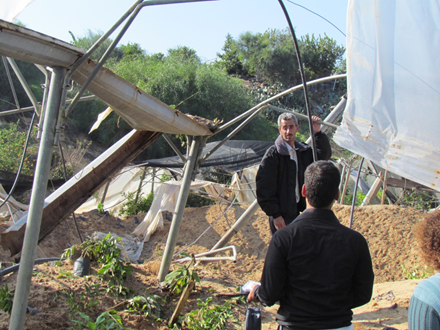
One bomb, one greenhouse, 3000 citrus trees, ten family livelihoods. Nov 2012 (Marilyn Garson)
The long duration of this occupation is significant, not only because occupation is required to be temporary but also because this occupation is hardening. Our policy – already tilted – should be changing in response. In October the UN Special Rapporteur assessed the “deepening occupation”:
The now 54-year-old Israeli occupation of Palestine – always repressive, always acquisitive – has been metastasizing into something much harsher and more entrenched: the permanent alien rule of one people over another, encased in a two-tiered system of unequal laws and political rights.
Israel has pursued a policy of incremental de facto annexation in the territories it has occupied since 1967… This is not a conflict between equals… a powerful state is controlling another people through an open-ended occupation… What has become increasingly clear in recent years is Israel’s intent to maintain its structural domination and oppression of the Palestinian people through indefinite occupation… a situation that arguably constitutes apartheid. It is now time for the international community to recognise and confront the consequences of Israel’s policies and actions.
Then-UN Secretary General Ban Ki Moon, speaking to UNRWA staff in Gaza City during the 2014 bombardment. (Marilyn Garson)
Foreign Minister Nanaia Mahuta has made it clear that our policy is fixed, illegalities notwithstanding.
Successive New Zealand Governments have been clear that Israeli settlements are a violation of international law… New Zealand will continue to pursue a principled and balanced approach to the Middle East Peace Process including support for a two-state solution to the Israeli-Palestinian conflict… The two-state solution has been the accepted basis for resolving the Palestinian question for many decadesnow.(direct correspondence, Dec 14, 2020)
Again in Palestine, we use aid to buttress the status quo. We defray Israel’s costs, and co-manage the humanitarian catastrophe of occupation by sending the most passive forms of aid. We send relief food rather than the means of food production or food sovereignty.
Strangled by the blockade, Gaza has one of the world’s highest rates of literacy and youth unemployment. Technology is the object of many hopes. In 2015, my team was trying to raise start-up funds for our GGateway social enterprise. Donor delegations were frequent after the devastating 2014 war, but they all said the same thing: great idea, anywhere else. Their government would not send development assistance to Gaza. Gazans are meant to sit in limbo. At last, the South Korean government invested – their first start-up in the Gaza Strip.
The hardest job in the world, we used to say, is to look for a job in Gaza.
Surely Aotearoa did not set out to normalise or legitimise the structural oppression of a nation. Yet here we are again, loyally enabling and siding with actions whose logical outcome we do not seek. Palestine, like Cambodia, underscores the deadly consequences of our acquiescence.
New Zealand World War I graves, Deir al Balah War Cemetery, Remembrance Day 2014 (Marilyn Garson)
Some people scoff at the very idea of values-led policy. They call it naive. I ask whether our policies in Cambodia or Palestine, unanchored by values, look sophisticated. Or independent.
The colonial face of our foreign policy presumes that the story of our world is only the story of powerful states. At our worst, we have been so eager to sit next to them, we have followed them onto the wrong side of history.
On issues of global justice, we must situate our policy with those who share both our interests and our values – the two are not in competition.
The wealthy states bring a computational theory to transformational issues. They calculate how little of their lifestyle they must give up in order to stabilise the rest. They send doses of COVID-19 vaccine to African nations while preserving the patents. They manage the disruptions of climate as one-off events, even as the waters lap onto the Pacific island shores around us. Their rearguard action builds walls to hold back the migrants without acknowledging that extractive capitalism and US-led militarism helped to necessitate the migrants’ flight.
We face issues which will not be resolved at the margins. 2022 should be a year of radical foreign policy ambitions, around which to galvanise new networks of shared purpose. It is not enough for our policymakers to trot along behind the states that brought us to the cliff’s edge. We need to see the earth and the human beings who share it, in the context of a future we will experience together. We need to ask what we owe and how much we can add.
Future-facing values are all around us. They are the values of tangata whenua and indigeneity, of young people who will live with the consequences, of the lessons we are learning in our uneven decolonisation. We are beginning to re-learn history and philosophy. Now we need to project our local lessons outward, to shape a more principled foreign policy.
Marilyn Garson
[1] On the limbo of war economy, see the work of Mark Duffield. On humanitarian donorship practice, see initiatives like the Overseas Development Institute’s Good Humanitarian Donorship. On the specifics of the Cambodian aid embargo, see for example Punishing the Poor, which Oxfam has made freely available here.
[2] Find here an assistant law professor’s extended discussion on the nature of recognition, including the question ‘How much recognition is needed?’
[3] Nadia abu Shanab elaborates on this lack of access around minute 32 of this Te Kuaka podcast by NZ Alternative.
[4] The UN Special Rapporteur has outlined the roles and responsibilities of states in his 2019 report A/74/507, the Security Council’s failure to impose the costs obliged by its own resolutions and international law in his 2020 report A/75/532, and the roles played by key multilateral groups in his 2021 report A/76/433.
Most communities fragment under pressure, as we are abruptly finding in Aotearoa. Gazans are constantly awareness that they are powerless before an overwhelming, uncaring threat – yet somehow, in extremis Gaza coheres like contact cement.
November 14, 2012 was the first night of an eight-day bombardment and I was alone in my apartment on the 14th floor. With each explosion nearby, my building and my stomach lurched further than I would have expected.
Worst was the helplessness. Gaza has no defensive weapons, so Israeli planes circled and bombed at will. I sat and waited – BOOM, lurch, correct – sat and waited. I tracked each plane across my ceiling and thought, this is what the fish sees in its barrel.
My Palestinian team members called with practical advice. Did I know to leave the windows slightly open to diminish the chance that they would blow inward? Had I plugged in every device to charge while there was electricity? In two of their households, parents were distracting their small children by teaching them to dance to the peculiar backbeat of the naval shelling that was pouring into Beach Camp, an undefended refugee camp just north of me.
Two of my male colleagues called me. They each lived nearby. Each man offered to leave his family, collect me, and bring me home to live with his family through the war. One of those men had enduring professional differences with me, yet he pressed me especially to take shelter with him. No one, he insisted, should be alone beneath the bombs.
I’ve thought of him often through Covid. Imagine calling up the people you dislike, and pleading with them to lock down with your family through the worst, open-ended stress. Imagine checking in with your nemesis daily because you are sharing an experience more profound than your dislike. Rather than turning on each other, rather than assuming that personal responsibility is sufficient in a collective crisis, Palestinians knew, ‘I will be well while I am caring for you, too.’
In 2013, I was appointed to a task force. Israel’s blockade of Gaza produces deep poverty, and 800,000 Gazans were then in need of relief food (today, more than 1,000,000 Gazans need relief food). Budgets were not keeping pace with need. Our task force had to devise policy and operating systems to prioritise the food entitlements of 800,000 human beings behind a wall. Disrupted by the war of 2014, it took the task force 16 months to devise, implement, code, train and roll out a new system. When Covid struck, the system enabled food distribution, rather than collection.
Our thorniest ethical question was this: what happens when a parent secures their family’s entitlement by giving false information? In a situation of scarcity and malnutrition, what policy response is fair?
Fair to whom, we wondered. Fair to a fiercely protective parent? Fair to the neighbour who did not lie? How could civic order be maintained, if not by punishing dishonesty? How else should the system preserve its integrity? What was the point of having policy if entitlement could be forged? What would happen to neighbours if trust broke down? Round and round we went, trying to devise fairness behind an indefensible wall.
The man who broke through our stuckness was a self-described trouble-maker with lifelong radical credentials. “Wait,” he pleaded, “stop. Who is this policy for? Who are we responsible to? Food policy is a policy for children’s nutrition, so why are we arguing about adults? What is fair for the children?”
We devised our solution from caring rather than punishment, aiming to harness shared values. Our system was despised and mistrusted, as would be any mechanism to cope with insufficient resources. However, it nourished children first and we could devise no more decent response to Israel’s indecent deprivation of Gazans.
Surviving in a situation willfully designed to harm them, Gazans made goodness their intentional, hourly work. In so doing, they refused to be defined by the violence of others and got on with the business of making the better world they had in mind. They chose to act as if they had already won.
Their choices choices feel relevant now, as the language of outrage seeps into our social fractures. People I care about are being drawn onto uncharacteristically angry and absolute ground. This is going to call for every bit of transcendence we have.
Alternative Jewish Voices joins our fellow Jewish activists to protest the incarceration of Palestinians in Israel’s military jails.
In September 2021 the world’s attention focused briefly on six Palestinian prisoners who escaped from the Gilboa Prison in northern Israel. The spotlight revealed deep and ongoing human rights violations against Palestinian prisoners in Israeli jails.
As Jews from around the world, we in the International Jewish Collective for Justice in Palestine (IJCJP) are dismayed and acutely sensitive to the age-old command not to stand idly by.
The statistics are grim. 4,650 Palestinian prisoners are now incarcerated, including 200 children and 40 women. Some 520 people are held in administrative detention, which provides that a prisoner can be held for months without charge or trial, which can then be renewed—over and over again ad infinitum. One Palestinian former aid worker from Gaza has been held more than five years, appearing in Israeli courts 166 times without evidence that any crime has been committed. (1) One of the Gilboa escapees, Monadel Yacoub Nafe’at, had been in administrative detention since 2019.
In addition, Human Rights Watch reports that “Israeli authorities try Palestinians charged with crimes in military courts, where they face a conviction rate of nearly 100 percent.” (2) Israel is the only country on earth to routinely prosecute children in its military courts.
For decades, prisoners have charged officials with torture, beatings and other forms of maltreatment, all of which are prohibited by international law. Hundreds of Palestinian prisoners have engaged regularly in hunger strikes to protest their conditions.
This revolving door of imprisonment touches every Palestinian family, and amounts to the collective punishment of a people.
If we do nothing, how will we reply when a generation of Palestinians asks, “Why have all of my male cousins been incarcerated? Why have all my uncles been incarcerated?” (3)
Let us take seriously another age-old precept: Justice, justice, thou shall pursue. Let us therefore act in each of our communities to draw attention to these injustices where we can, whether in individual or communal settings.
Israeli Defense Minister Benny Gantz has issued a military order which designates six leading Palestinian legal and human rights groups as “terrorist” organisations. The government of Israel has declined to back its orders with evidence.
On the websites of the targeted organisations, you will learn about incarcerations, documented human rights violations, the imprisonment of children, aid to farmers in the West Bank. To prevent the sharing of such information, the Israeli government will now fight these activities as if they were fighting terrorists.
Leading global human rights organisations have objected in the strongest terms. They clearly state that they will continue to work with their Palestinian colleagues: Amnesty International and Human Rights Watch call it “an attack on the human rights movement” while B’Tselem calls it “a draconian measure that criminalizes critical human rights work.”
Alternative Jewish Voices calls this military order the contemptible act of an authoritarian. This order would jeopardise the funding which creates factual information about Palestinian life under Israel’s occupation. The order poses a new level of violent threat to the defenders of human and legal rights. If we do not defuse that threat internationally, it will set a frightening precedent for all of the people who stand up to authoritarians around the world.
Israel’s military order extends its pattern of criminalising any resistance to its regime of occupation, de facto annexation and legislated apartheid.
Members of Israel’s government refer to boycotts – the non-violent exercise of economic choice – as economic terrorism. Israel’s President called Ben and Jerry’s decision not to sell ice cream on occupied land as “a new kind of terrorism.” Around the same time, Israel confiscated 23 tons of chocolate bars destined for Gaza with the explanation, “We will continue to hunt down networks that fund terror.”
There seems to be no form of resistance that Israel won’t categorise as terroristic. This new military order will criminalise even the use of the law. In occupied Palestine, it appears that resistance will be treated as terror, period.
We urge the government of Aotearoa-New Zealand to take the recent advice of Ban Ki Moon, former Secretary General of the United Nations, and change our yawning diplomatic stance:
“a powerful state is controlling another people through an open-ended occupation, settling its own people on the land in violation of international law and enforcing a legal regime of institutionalised discrimination… What has become increasingly clear in recent years is Israel’s intent to maintain its structural domination and oppression of the Palestinian people through indefinite occupation… resulting in a situation that arguably constitutes apartheid. It is now time for the international community to recognise and confront the consequences of Israel’s policies and actions in this regard.”
When will we defend the people who defend the law and human rights?
At a recent Wellington Jewish community meeting, participants made clear their dissatisfaction with the Jewish Council’s tone of voice, composition, accountability and their narrow definition of the Jewish community’s shared interests.
The Wellington Jewish Council (our regional council, which also sends four delegates to the NZ Jewish Council’s membership of eighteen) has taken this feedback on board. They have begun the work to revise their constitution and earn their mandate.
We at Alternative Jewish Voices regard this as a hopeful, significant opening. We share this excerpt from the Council’s email with their agreement:
After reflecting on the discussion held, we propose that in order to re-establish the Wellington Jewish Council, a new constitution will be required that can capture the voice and aspirations of the community. Below is a survey to help begin that journey. …
Until we have completed the process of drafting and confirming a constitution, the four of us will not purport to speak on behalf of the Wellington Jewish Council as we do not feel that we have a mandate to do so.
The Council has circulated a survey to elicit the Jewish community’s views about the representation we want. Here’s the challenge. Wellington Jews who belong to a synagogue will have received this survey at least once. Our existing institutions have multiple channels and email lists. How can this consultation include the members of our community who do not belong, or have not felt welcome, in our institutions? They are disenfranchised now, and their views are essential if this process is to result in the genuine representation of our community as a whole.
Please help by sharing this survey with members of the Wellington Jewish community who might not have received it. If you are Jewish in the Wellington region, please complete a survey. Please include yourself, in the hope that this conversation will lead to a more inclusive community, and a Council voice that actually reflects and represents more of us.
If you want a copy of the regional or national Jewish Council’s current constitution, please write to the contact address below or write directly to the Wellington Jewish Council. The survey is open for three weeks.
Imagine foreign policy led by our values, grounded in justice.
Imagine policy that speaks to decolonisation – here and there.
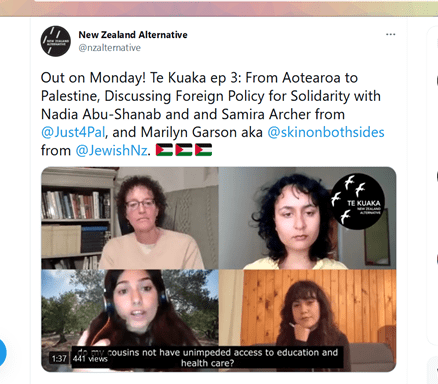
Listen to the podcast by Te Kuaka / New Zealand Alternative: From Aotearoa to Palestine, with Nadia Abu Shanab and Samira Archer of Justice For Palestine, and Marilyn Garson of Alternative Jewish Voices.
Big thanks to Phoebe and all of NZ Alternative for making a space to speak aspirationally about the world that can, and should, become our world.
We formed Alternative Jewish Voices as a platform for the unrepresented breadth of our Aotearoa Jewish community. Our community is wider than the membership of Jewish synagogues and organisations.
At the series of Wellington rallies in May, people repeatedly approached us after we spoke. They introduced themselves as Jews, unaffiliated with any institution. Some fretted that they might be considered “not Jewish enough to speak.”
The power to define, and conversely the fear of being excluded by a definition, is hardly new. We are not writing to examine our history of communal exclusion or alienation here. We would like to end it.
If you have a Jewish parent or grandparent, then you are part of the community. Join it: speak up, own and be identified with Jewish issues, explore your culture, history, religion or identity – however you may enter into it. If anyone doubts your standing to do that, please educate them nicely by explaining, “I am as Jew as you.”
In our last national census, the number of people identifying as Jews fell by 20%. There are nearly three times as many self-identified Jedi warriors as there are Jews in Aotearoa at the moment. Notwithstanding the inherent appeal of being a Jedi warrior, it might also be that our Jewish institutions don’t feel relevant or welcoming to all of us.
This is not a political exercise. We won’t ask about your politics and we won’t claim to be representing you. We seek only a more inclusive sense of our own community. We should know each other.
We invite you to get in touch. Write to the contact address at the bottom of this page. We’ll make a mailing list, we’ll ask how you might like to be in community. Who knows where it might lead. We hope you will find others with curiosity like your own. New friends, a meal, an exchange of stories, a debate, a bit of exploration about this Jewishness of ours – whatever.
Please get in touch, and please share this with others who might want to join us.
Shana Tova – happy Jewish New Year – to Palestine, from Alternative Jewish Voices and friends.
2021 has been the most difficult year.
May the coming year be much sweeter.
May you live in dignity,
freedom and equality,
with the full measure of your rights
and the full expression of your culture.
May your homes be safe and your journeys undisturbed. May those who have been driven out choose whether to return.
May Palestinian nationality be recognised, so that you speak as of right and manage the resources of your land wisely.
We wish your children healthy food and clean water, schoolbooks and playgrounds and art, and the knowledge that they will sleep safely in their beds at night.
We wish you health in this time of pandemic.
We wish you could just be, living your lives without violence and oppression. We wish you normalcy – work, rest, untroubled sleep.
We wish you each a vote and a voice to determine the transformation that must occur for everyone who lives between the Jordan River and the Mediterranean Sea. May it become a shared space governed as all of its citizens see fit, unscarred by ugly walls and checkpoints.
May you enter into the conversations that will realise such change.
We wish energy and impatience to all of us around you, as we escalate the principled pressure for transformation. For as long as it is radical to insist upon the full measure of Palestinians’ equal human rights and the unexceptional application of international law; for that long we will continue.
May all of our religions be respected, loved and protected. That, too, is our shared work.
I want to call out the horrific crime perpetrated by the Palestinian Authority for the violent death in custody of a prominent critic.
Palestinian people deserve justice and the right to free speech, expression and protest. And free and fair parliamentary elections, which is under threat from the PA.
Whether they live in the Occupied West Bank, in Gaza or the state of Israel, every person, Israeli, Palestinian, Jew, Christian, Muslim, whatever race, religion or citizenship (or lack thereof) is entitled to basic human rights.
Unfortunately this is not the case for many (most?) persons living under Israeli, Palestinian Authority or Hamas rule.
All people, including those living under corrupt, militaristic and authoritarian governments deserve basic human rights.
Nizar Banat was deprived of these rights when (according to local media) he was taken from his home, beaten and dragged away. He is dead, murdered at the hands of PA thugs.
You will often see the Alternative Jewish Voices collective calling out injustices by the Israeli Government against Palestinians. I strongly oppose and will speak out against the Occupation and oppressive policies and actions of the Israeli government.
I also oppose and call out the militant and oppressive rule of Hamas over Gazans, and the corrupt rule of the PA over West Bank Palestinians.
But I direct my words at the Hamas leadership, not at the people of Gaza.
I call out the corrupt rule of the PA, not at the Palestinian people of the West Bank.
I challenge the aggression, the provocation and human rights abuses of the Israeli government, not at the individual residents of the State of Israel.




 Sh'ma Koleinu - Alternative Jewish Voices (NZ)